12:01 PM - 6 March, 2026
  • HOME
  • About HRITC
    • HRITC “PDF”
    • Who We Are?
    • general objective
    • Vision
    • Main Programs Of Center
    • Advisory Board and Organizational Structure
    • Annual activity reports
  • Reports
    • Qualitative Reports
    • Monthly monitoring reports
      • Monitoring reports 2025
      • Monitoring reports 2024
      • Monitoring reports 2023
      • Monitoring reports 2022
      • Monitoring reports 2021
      • Monitoring reports 2020
      • Monitoring reports 2019
      • Monitoring reports 2018
      • Monitoring reports 2017
      • Monitoring reports 2016
      • Monitoring reports 2015
    • Infographic Monitoring Of Violations
  • Follow-ups
    • Hritc News
    • General news
    • Press releases
    • Writings of the head of the center
  • Human Rights Library
    • Human rights issues
    • Educational and training materials
    • Documentation for United Nations committees and bodies
    • Human rights documents and instruments
    • Yemeni documents
  • Publications
    • Our Rights Journal
    • Guides Series
  • More
    • Events and conferences
    • Humanitarian Stories
    • HRITC Archives
  • Watch with us
  • en English
  • ar العربية
HRITC
  • Login
  • HOME
  • About HRITC
    • HRITC “PDF”
    • Who We Are?
    • general objective
    • Vision
    • Main Programs Of Center
    • Advisory Board and Organizational Structure
    • Annual activity reports
  • Reports
    • Qualitative Reports
    • Monthly monitoring reports
      • Monitoring reports 2025
      • Monitoring reports 2024
      • Monitoring reports 2023
      • Monitoring reports 2022
      • Monitoring reports 2021
      • Monitoring reports 2020
      • Monitoring reports 2019
      • Monitoring reports 2018
      • Monitoring reports 2017
      • Monitoring reports 2016
      • Monitoring reports 2015
    • Infographic Monitoring Of Violations
  • Follow-ups
    • Hritc News
    • General news
    • Press releases
    • Writings of the head of the center
  • Human Rights Library
    • Human rights issues
    • Educational and training materials
    • Documentation for United Nations committees and bodies
    • Human rights documents and instruments
    • Yemeni documents
  • Publications
    • Our Rights Journal
    • Guides Series
  • More
    • Events and conferences
    • Humanitarian Stories
    • HRITC Archives
  • Watch with us
No Result
View All Result
  • HOME
  • About HRITC
    • HRITC “PDF”
    • Who We Are?
    • general objective
    • Vision
    • Main Programs Of Center
    • Advisory Board and Organizational Structure
    • Annual activity reports
  • Reports
    • Qualitative Reports
    • Monthly monitoring reports
      • Monitoring reports 2025
      • Monitoring reports 2024
      • Monitoring reports 2023
      • Monitoring reports 2022
      • Monitoring reports 2021
      • Monitoring reports 2020
      • Monitoring reports 2019
      • Monitoring reports 2018
      • Monitoring reports 2017
      • Monitoring reports 2016
      • Monitoring reports 2015
    • Infographic Monitoring Of Violations
  • Follow-ups
    • Hritc News
    • General news
    • Press releases
    • Writings of the head of the center
  • Human Rights Library
    • Human rights issues
    • Educational and training materials
    • Documentation for United Nations committees and bodies
    • Human rights documents and instruments
    • Yemeni documents
  • Publications
    • Our Rights Journal
    • Guides Series
  • More
    • Events and conferences
    • Humanitarian Stories
    • HRITC Archives
  • Watch with us
No Result
View All Result
HRITC | مركز المعلومات والتأهيل لحقوق الإنسان
No Result
View All Result
Taliban Leader Feared Pakistan Before He Was Killed

Taliban Leader Feared Pakistan Before He Was Killed

1:29 PM - 22 August, 2017
in - Cursor, General news
A A
681
SHARES
1.4k
VIEWS
شارك عبر البريد الإلكتروني

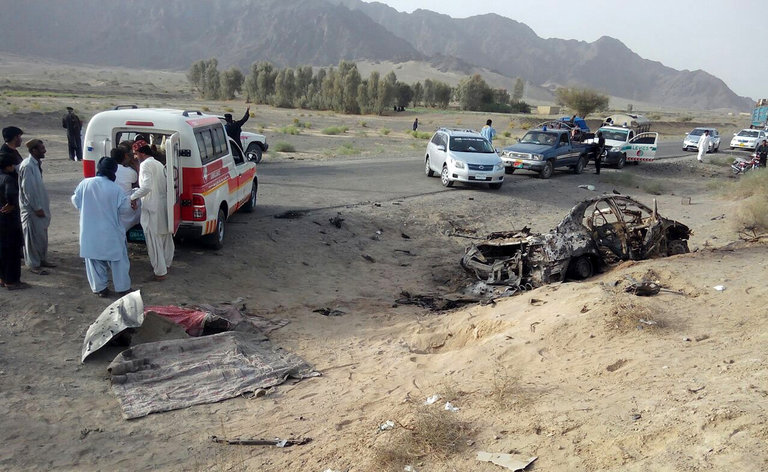
KANDAHAR, Afghanistan — In the hours before he was killed in an American drone strike, Mullah Akhtar Muhammad Mansour, then the Taliban leader, knew something was wrong.

He was on his way home from a secret visit to Iran in May 2016, driving across a remote stretch of southwestern Pakistan, when he called his brother and relatives to prepare them for his death.

“He knew something was happening,” a former Taliban commander, who is close to Mullah Mansour’s inner circle, said in an interview. “That’s why he was telling his family members what to do and to stay united.”

It is rare for a Taliban commander to sit for an interview, but this one spoke on the condition that his name or location not be made public, because he had recently defected from the insurgents’ ranks and his life was under threat.

His account offered previously unreported insights into the final hours of Mullah Mansour’s life, and why and how he was killed, revealing a dangerously widening rift with his Pakistani sponsors.

The account was complemented and supported in interviews with two senior Afghan officials who have conducted their own investigations into the Taliban leader’s death — Haji Agha Lalai, presidential adviser and deputy governor of Kandahar; and Gen. Abdul Raziq, the police chief of Kandahar Province.

More than a year after the event, Afghans on both sides of the war and a growing number of Western security analysts say that Pakistan most likely engineered Mullah Mansour’s death to remove a Taliban leader it no longer trusted.

“Pakistan was making very strong demands,” the former commander said. “Mansour was saying you cannot force me on everything. I am running the insurgency, doing the fighting and taking casualties and you cannot force us.”

After Mullah Mansour’s death, Mawlawi Haibatullah Akhundzada, an Islamic cleric with no military experience, was selected as leader of the Taliban. Yet Afghanistan has seen little reprieve with his death, as hard-liners within the movement took over and redoubled their offensive to take power.

There is little chance of anyone speaking out, the former commander said. “Ninety percent of the Taliban blame the Pakistanis,” he said. “But they cannot say anything. They are scared.”

Mullah Mansour had been intent on expanding his sources of support as he prepared an ambitious offensive across eight provinces in Afghanistan last year, they said.

He relied on Pakistan’s Intelligence Service and donors from Arab gulf states, as well as Afghan drug lords, for the main financing of the Taliban, but he was also seeking weapons and other support from Iran, and even Russia. He met officials from both countries on his last visit to Iran.

Mullah Mansour’s outreach to Iran was also aimed at getting the Taliban out from under Pakistan’s thumb, according to his former associate and Afghan officials, so he could maneuver to run the war, but also negotiate peace, on his own terms. That was where his differences with Pakistan had grown sharpest.

Mullah Mansour had resisted orders from Pakistan’s intelligence agency, the ISI, to destroy infrastructure — schools, bridges and roads — to increase the cost of the war for the Afghan government. He opposed the promotion of Pakistan’s hard-line protégé Sirajuddin Haqqani to be his deputy, and he had dodged Pakistan’s demands to push its agenda in negotiations.

Critically, he wanted to devolve more power to regional Taliban commanders, allowing them to raise their own funds and make their own decisions, in order to own the Afghan nationalist cause and loosen Pakistan’s control over the insurgency.

Others with close knowledge of the Taliban, including the former Taliban finance minister and peace mediator Agha Jan Motasim, said that Mullah Mansour was ready to negotiate and had sent top representatives to successive meetings in Pakistan.

While on his way to Iran, Mullah Mansour had stopped in the Girdi Jungle refugee camp, a hub of Taliban activity in Pakistan, where he called on Taliban commanders and elders to gather for a meeting.

“Ten days before he was killed he sent messages to villages and to commanders asking them to share their views on peace talks,” said General Raziq, the police chief of Kandahar Province, a fierce opponent of the Taliban, who knows the movement well.

He says that Mullah Mansour was looking for new protectors as his disagreements with Pakistan were growing.
Tags: pakistanpakistan
SendShare272Tweet170Share48Send

Related Posts

نحو 30 ألف حالة انتهاك موثق في تعز
- Breaking news

نحو 30 ألف حالة انتهاك موثق في تعز

1:36 AM - 4 February, 2026
1.4k
Panel of Experts on Yemen: Crisis & Houthi Refusal of Dialogue
Follow-ups

Panel of Experts on Yemen: Crisis & Houthi Refusal of Dialogue

6:42 PM - 8 November, 2025
1.4k
Yemen Panel of Experts highlights on human rights violations in Yemen
- Cursor

Yemen Panel of Experts highlights on human rights violations in Yemen

6:29 PM - 8 November, 2025
1.4k
UN Summit in Doha to Revitalize the Social Contract
Follow-ups

UN Summit in Doha to Revitalize the Social Contract

5:26 PM - 31 October, 2025
1.4k
عدامات واغتصاب جماعي خلال توغل قوات الدعم السريع في الفاشر
Follow-ups

Executions and mass rapes: During the Rapid Support Forces’ incursion into Al-Fashir

5:07 PM - 31 October, 2025
1.4k
The Houthi militia commits serious violations against UN and international organization staff in Yemen.
- Breaking news

The Houthi militia commits serious violations against UN and international organization staff in Yemen.

3:37 PM - 28 October, 2025
1.4k
Load More

Center Archive

Facebook Twitter Youtube Instagram RSS

Obtaining consultative status in the United Nations Economic and Social Council
Obtaining observer status with the League of Arab States

Newsletter

    The Republic of Yemen – Taiz – Al-Majliyah Tel: 04-216277
    Coordination offices for the center in Aden – Cairo – Beirut

    © 2025 Human Rights Information and Training Center | HRITC All rights reserved .. Development by Target-group.org

    Welcome Back!

    Login to your account below

    Forgotten Password?

    Retrieve your password

    Please enter your username or email address to reset your password.

    Log In
    No Result
    View All Result
    • HOME
    • About HRITC
      • HRITC “PDF”
      • Who We Are?
      • general objective
      • Vision
      • Main Programs Of Center
      • Advisory Board and Organizational Structure
      • Annual activity reports
    • Reports
      • Qualitative Reports
      • Monthly monitoring reports
        • Monitoring reports 2025
        • Monitoring reports 2024
        • Monitoring reports 2023
        • Monitoring reports 2022
        • Monitoring reports 2021
        • Monitoring reports 2020
        • Monitoring reports 2019
        • Monitoring reports 2018
        • Monitoring reports 2017
        • Monitoring reports 2016
        • Monitoring reports 2015
      • Infographic Monitoring Of Violations
    • Follow-ups
      • Hritc News
      • General news
      • Press releases
      • Writings of the head of the center
    • Human Rights Library
      • Human rights issues
      • Educational and training materials
      • Documentation for United Nations committees and bodies
      • Human rights documents and instruments
      • Yemeni documents
    • Publications
      • Our Rights Journal
      • Guides Series
    • More
      • Events and conferences
      • Humanitarian Stories
      • HRITC Archives
    • Watch with us
    • Login
    • en English
    • ar العربية
    مركز المعلومات والتأهيل لحقوق الإنسان يستخدم ملف تعريف الارتباط Cookieإعرف أكثر.
    • العربية
    • English