Information Center Documents the Mutilation of 11 Bodies in Taiz: Desecrating the Dead is a War Crime Not Subject to a Statute of Limitations
Taiz – November 12, 2026
The Human Rights Information and Training Center (HRITC) has condemned the Houthi militias for committing the crime of mutilating the bodies of fallen citizens in Taiz.
The Center—a regional organization holding consultative status with the United Nations—affirmed that International Humanitarian Law and International Human Rights Law take a clear and strict stance against the mutilation of dead bodies, whether they belong to combatants or civilians, and regardless of whether the crime occurs during clashes or after fighting has ceased and the bodies are recovered. HRITC stated that mutilating corpses through dismemberment, disfigurement, burning, pouring chemical substances, decapitation, or gouging out eyes is not merely inhumane behavior, but constitutes a war crime, in addition to being a grave violation of the sanctity of the dead and human dignity.
HRITC documented that at least 11 bodies of fallen soldiers from government forces and the popular resistance in Taiz Governorate were subjected to violations including mutilation, disfigurement, chemical burns, broken limbs, and the obliteration of facial features. The Center described these incidents as a dangerous escalation in the assault on the sanctity of the dead and their human dignity.
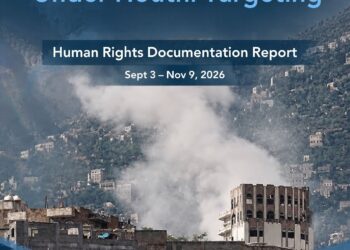
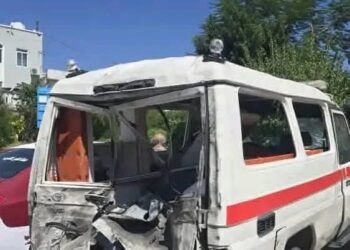
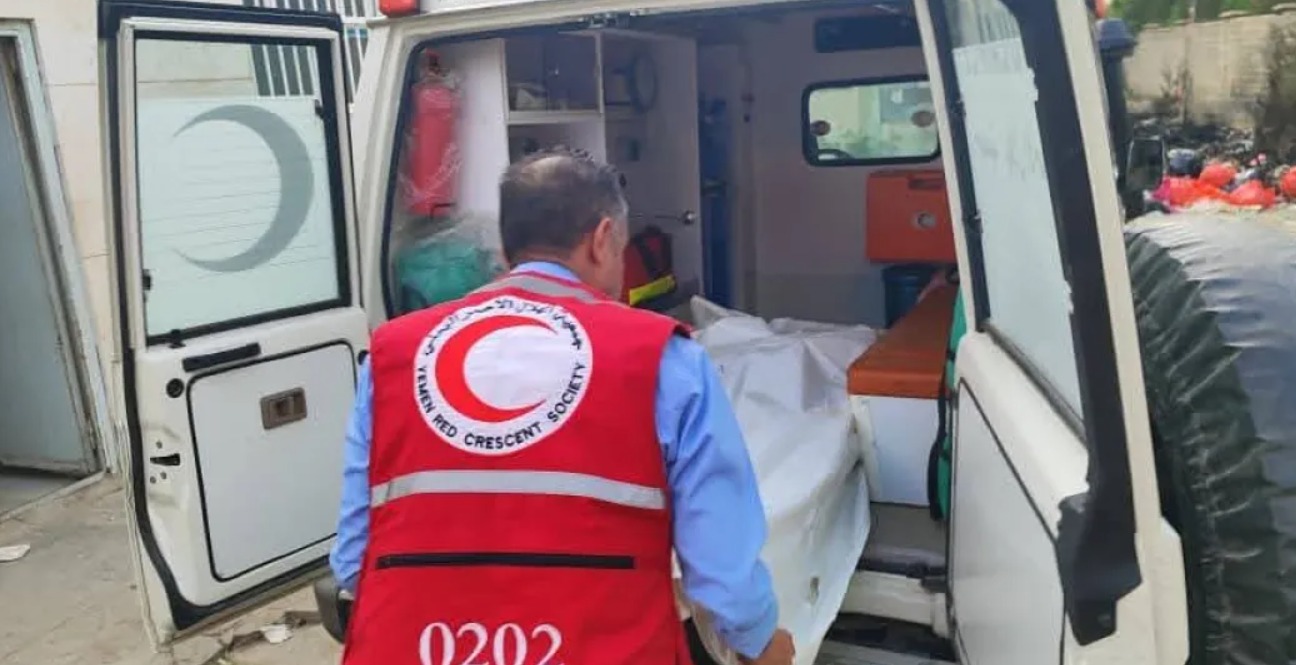
In a human rights report released today titled “The Sanctity of the Dead Violated: Documenting Crimes of Corpse Mutilation in Taiz,“ the Center explained that eight bodies—handed over to military and medical authorities via the International Committee of the Red Cross (ICRC) last October—showed signs of deliberate mutilation upon medical examination. According to a report from the Military Hospital in Taiz, this included pouring corrosive chemical substances, breaking hands and feet, and obliterating facial features.
The report also pointed to another incident that occurred on the Sanamat front in Jabal Sabir this November, involving three bodies. Testimonies from the victims’ families and local sources indicated that the bodies were subjected to extremely brutal forms of mutilation, including the amputation of limbs, gouging out of eyes, cutting off ears, pouring acid on one of the bodies, decapitating another, and extracting the heart of the third. The Center emphasized the necessity of completing medical and forensic verification of the incident’s details.
HRITC has monitored previous cases of Houthi militias withholding the bodies of resistance fighters in Taiz since 2016 and using some of them as bargaining chips in prisoner exchange deals. The Center noted that these recent incidents reveal a shift toward direct assaults on corpses and post-mortem mutilation.
The report affirmed that mutilating dead bodies violates the rules of International Humanitarian Law—specifically Rule 113 of Customary International Humanitarian Law, which prohibits the desecration and mutilation of the dead—and amounts to war crimes requiring accountability.
Furthermore, Common Article 3 of the four Geneva Conventions prohibits violence to life and person—in particular murder, mutilation, cruel treatment, and torture—as well as outrages upon personal dignity, specifically humiliating and degrading treatment. This protection extends to persons placed hors de combat (out of combat), including those who have been killed or wounded and are unable to continue fighting. The Rome Statute of the International Criminal Court also criminalizes such acts under Article 8.
The Center called for an urgent, independent international investigation, subjecting the bodies to thorough medical and forensic examinations, identifying the nature of the chemical substances used, preserving evidence and testimonies, and investigating individual and command responsibilities to ensure perpetrators do not escape punishment.
HRITC stressed that human dignity does not end with death, and that assaulting the bodies of victims is not only a violation of the sanctity of the dead, but also an assault on the dignity of their families and society as a whole. It urged the United Nations and international organizations to take immediate action to investigate and ensure accountability.