Yemen Panel of Experts
Key Violations Documented by the Security Council’s Panel of Experts from August 1, 2024, to July 31, 2025
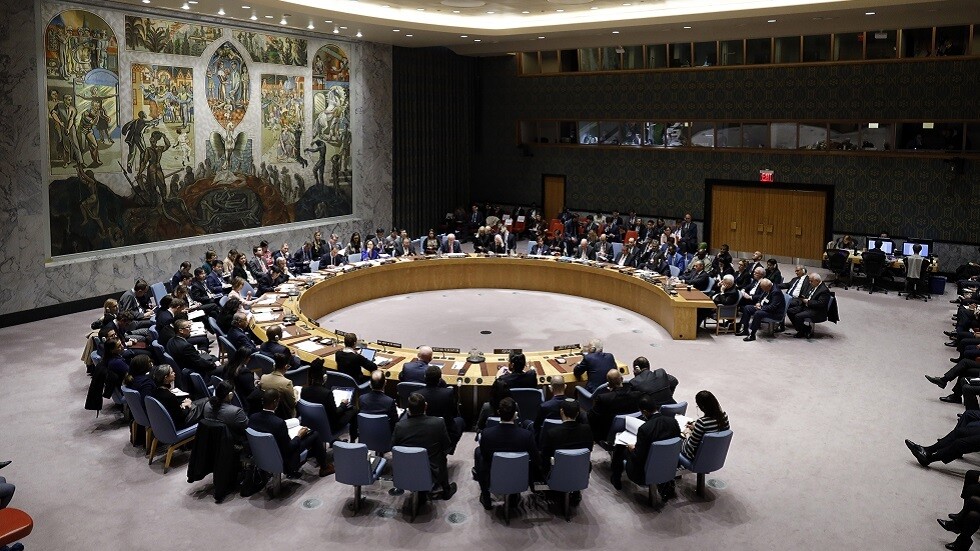
The Panel of Experts presented its report to the Security Council on November 3, documenting the most prominent violations committed by the Houthi militia during 2025, which constituted a blatant violation of International Humanitarian Law (IHL) and International Human Rights Law (IHRL). Most of these violations were concentrated in the governorates of Ibb, the Capital Secretariat of Sana’a, Al-Bayda, Dhamar, and Ta’iz.
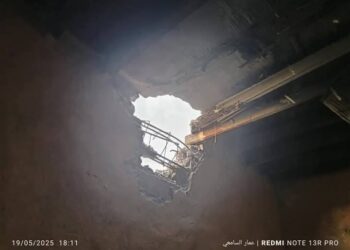
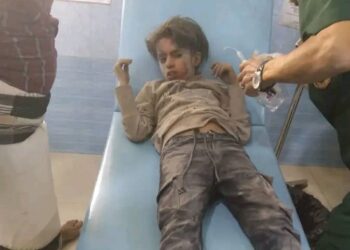
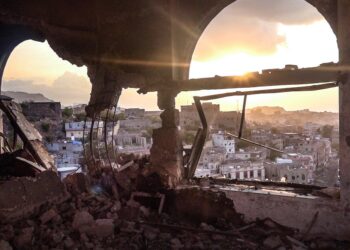
They primarily involved indiscriminate attacks against civilians and civilian objects, which in many cases led to arbitrary killings. At least 164 civilians were killed, including 71 children and 18 women, and 239 civilians were injured, including 91 children and 25 women. Additionally, 63 homes were destroyed, 19 places of worship and three schools were occupied, and the Houthis used six places of worship and one school as military bases. At least three places of worship and one school were damaged or destroyed.
About 24 civilians were killed and 126 were injured due to Israeli airstrikes, and 96 civilians were killed and 170 were injured due to airstrikes carried out by the United States in Hodeidah.
Landmines and Improvised Explosive Devices (IEDs)
The governorates of Marib, Ta’iz, and Al-Jawf were the most affected by Houthi landmines, which were designed with the intent to kill. They were placed inside civilian areas, near schools, on pedestrian pathways, and in farms, and were often disguised as ordinary daily objects such as stones or children’s toys. The militia also used anti-tank mines to punish communities that resisted its rule.
Independent sources documented 51 casualties during the reporting period, including 17 deaths, resulting from mines planted by the Houthi militia.
Attacks on Civilians and Civilian Objects
The Houthis continued to use heavy weapons to attack and besiege residential areas, and repeatedly targeted civilians with sniper fire. Houthi attacks on commercial vessels in the Red Sea also persisted in blatant violation of IHL.
Arbitrary Detention and Enforced Disappearance
Official sources reported 306 cases of arbitrary detention and enforced disappearance attributed to the Houthis, who used arrests to widely suppress opposition, especially during the celebrations held on September 26, 2020, for Revolution Day.
The report indicated that the Zainabiyat played a key role in these operations, involving monitoring and managing field campaigns to prevent the dissemination of information, particularly about the effects of air strikes.
Many detainees remain forcibly disappeared, with some held in complete isolation for extended periods. The primary targets of arrests were journalists, teachers, activists, and religious figures critical of the Houthis.
Twenty-three UN staff members remain in detention, deprived of due process guarantees and allowed only minimal contact with their families. More than 50 humanitarian workers are also detained. The report noted a systematic pattern of targeting individuals perceived as a threat to the Houthis’ political or financial control, especially those involved in financial oversight or the disbursement of donor funds.
The report accused Abdulkarim Hashem Ali Al-Khiwani, also known as “Al-Karrar,” the head of the Houthi-affiliated Security and Intelligence Service, of executing these arrests, which are now being used for bargaining and obtaining concessions from international bodies.
Torture and Cruel Treatment
The Panel of Experts continues to document cases of torture and cruel, inhuman, or degrading treatment or punishment against detainees, such as being suspended in a “shish kebab” position, electrocution, nail pulling, drilling with nail guns, simulated drowning, and deprivation of food and medical care.
Extremely brutal methods such as “skinning” were used against women, and many victims were blindfolded and coerced into signing confessions and pledges. Some died under torture, while others were raped or threatened with rape. Many female detainees were subjected to sexual violence as a form of torture or punishment.
Violation of the Right to a Fair Trial
The Houthis used the judiciary as a tool to suppress opponents and stifle freedom of expression. The Specialized Criminal Prosecution in Sana’a leveled accusations of treason and espionage against hundreds of individuals. Detainees are often denied access to their arrest warrants or indictments, legal counsel, or evidence.
Many are held for long periods without trial or judicial oversight. Meanwhile, business owners and traders who refuse Houthi demands face detention, freezing of their assets, death sentences, and confiscation of property by the Specialized Criminal Court in Sana’a, which has become a major source of Houthi revenue.
Sexual Violence and Gender-Based Violence (GBV)
The report indicated that sexual violence is widespread in Yemen, but reporting is limited due to social stigma and the risks of “honour-based violence.”
Cases of child marriage and early forced marriage continue, exacerbated by poverty, with Houthi supervisors encouraging or coercing women and girls into marriage. Sexual violence is also used as a strategic tool to break the morale of opponents.
The report revealed the pivotal role of the Zainabiyat in committing sexual violence against women. Secret sources described members of the unit bathing female and girl detainees and handing them over to Houthi elements for rape, allegedly claiming it “purifies their souls” or “brings them back to life” by marrying one of the “sons of the House.”
One witness recounted observing about 25 rape cases through a hole in a cell wall. The Zainabiyat beat and torture those who refuse to please their rapists, and victims often face rejection from their families after release.
The Panel also documented a case of sexual slavery of a woman detained in Sana’a in 2025, and a recurring rape incident of a female doctor in 2022 by Houthi fighters after she was taken to treat the wounded at the front line.
Testimonies from former detainees and human rights activists indicated that children were born inside detention facilities as a result of rape, and in some cases, children were separated from their mothers after one year.
The report also pointed to the fabrication of moral accusations against Houthi opponents to extort or defame them, and the coercion of women into cooperation through cybercrimes such as hacking phones and stealing private photos.
Female activists are subjected to systematic campaigns of defamation, death threats, and asset freezes, and some are falsely accused of being “spies for Israel or the Mossad.”
The report documented a testimony of sexual violence against male children detained in Houthi-controlled areas, committed by lower-ranking soldiers acting without the knowledge of their commanders.
Child Recruitment and Use
The report clarified that the governorates most affected by child recruitment are: Sana’a, Hajjah, Dhamar, Amran, Sa’ada, and Al-Bayda.
The Houthis systematically recruit children through a structural system led by the General Mobilization Authority of the Ministry of Defense, using formal and informal channels such as the Ministry of Education, which organizes summer courses and Quranic schools to indoctrinate children as young as seven.
Changes introduced to the curriculum aim to cement the Houthi ideology in children’s minds.
The Zainabiyat pressure mothers to support the recruitment of their sons in exchange for educational or financial incentives. Children aged ten undergo a 40-day ideological course, followed by a 45-day military training course for the 15-18 age group, after which they are deployed to the front lines or used as drivers, guards, mine planters, or for propaganda tasks.
The Panel of Experts monitored eight batches of recruited children, each comprising about 7,000 children, totaling approximately 56,000 children, some of whom joined voluntarily out of necessity or ideological indoctrination since the start of Operation Al-Aqsa Flood.
The report also noted that the Zainabiyat recruit girls for espionage, monitoring, and logistical transport, including the transfer of explosives and tracking devices, often carried out in schools or during religious events.
The report concluded that the Houthi strategy for child recruitment aims to reshape Yemeni society through intellectual and military mobilization, divert humanitarian aid pathways, and produce a generation of “loyal, uneducated fighters,” through the disintegration of the family, exploitation of poverty, and the collapse of the social structure.
Obstacles to the Delivery of Humanitarian Aid
Humanitarian aid remains restricted within Houthi-controlled areas, especially with rising prices due to the Red Sea attacks and Israeli strikes on Hodeidah, which disrupted food supply routes.
The Houthis refuse to reroute goods and aid through the ports of Mukalla and Aden to avoid dealing with the legitimate government.
The Panel observed the looting of a World Food Programme warehouse in Sa’ada by Houthi forces, which contained food supplies designated for distribution.
Humanitarian organizations are forced to contract with Houthi-affiliated companies for aid distribution. The militia also compels these companies to hire elements nominated by the group to ensure control over beneficiary lists and the disbursement of funds to serve their interests.
The Houthis demand a portion of project funds and exploit humanitarian aid to generate revenue and support their war effort, by selling the aid, diverting it to fighters, or pressuring tribal leaders to recruit fighters in exchange for aid.
Restrictions on Freedoms
The Houthis have imposed extensive restrictions on freedom of expression, movement, and the work of NGOs, accompanied by practices of arbitrary detention, torture, and extrajudicial killing.
Journalists, academics, and activists face increasing suppression, reaching the level of enforced disappearance.
The report presented a case study on conflict-induced deprivation in Ta’iz governorate, pointing to a severe water crisis due to the water infrastructure being located in Houthi-controlled areas, who have disabled the main pumping system since 2015.
Out of 91 wells in the region, only 21 are in legitimate government areas, which meet only a fraction of daily needs. Access to sewage facilities and power stations under Houthi control is also difficult, making electrical supplies unstable.
Landmines remain a major hazard, especially in the Maqbanah district, which is among the most affected areas, in addition to remote border areas like the Mawza district, where mines have led to high rates of deaths and permanent injuries.